
Every slab that leaves The Slab Studio’s showroom in Santa Ana eventually ends up in someone else’s hands — a fabricator’s. The design conversation, the material selection, the beauty of a book-matched pair of slabs standing side by side: all of it depends on what happens next, in a fabrication shop, with saws and templates and a level of precision that most homeowners never think about until something goes wrong.
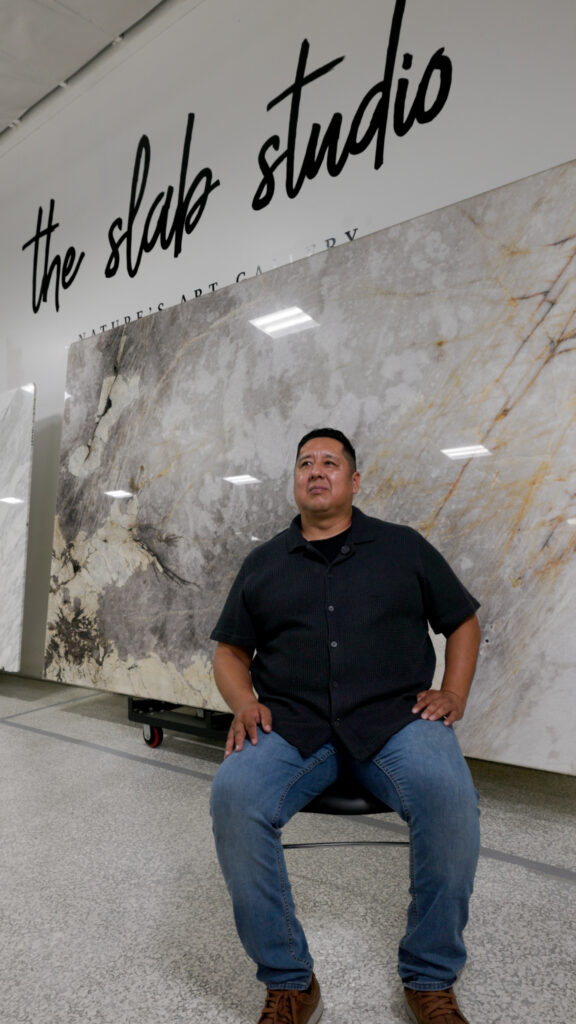
That’s the idea behind this new series: put the spotlight on the trade professionals who take The Slab Studio’s material and turn it into a finished kitchen, bath, or feature wall. First up is Abraham De Rosas, President of NCD Artisan Stone, a second-generation stone and tile fabricator and installer who has spent 26 years in the trade — and who sat down with us at The Slab Studio’s Santa Ana showroom, in front of a Patagonia Quartzite slab that had arrived just that morning.
A Trade That Runs in the Family
Abraham’s path into fabrication carries a family thread through it — stone and tile work runs in his family, and he came up in the trade as a tile installer before fabrication became his focus. The fabrication side of his business, though, started somewhere harder: in 2013, the fabricator he had relied on for years passed away. Rather than hand that trust to someone new, Abraham built the fabrication side of NCD Artisan Stone himself, launching it in 2015 and 2016.
I got into stone fabrication basically out of a tragedy that happened. The fabricator I used passed away, and since then I really couldn’t find anybody that I trusted. So the only person I could trust is myself.
— Abraham De Rosas
What’s kept him in it since is less about circumstance and more about genuine interest in the craft. By trade a tile installer, he describes slab fabrication as an entirely different discipline — one where every job means a different material, a different set of challenges, and, at the end, a client who’s happy with the result.
Two Decades of Change in What Gets Sourced
Fabricators who have been in the trade as long as Abraham has watched the entire material landscape shift underneath them. Twenty years ago, the natural stone market was dominated by two materials: granite and marble. Since then, the options have multiplied — quartz entered the market, then porcelain, and now an expanding range of quartzites and engineered materials that didn’t exist in the trade a generation ago.
Twenty years ago it was basically granite and marble. Now it’s all different types of materials — quartz, porcelain, quartzites. We’ve got to keep up to date every year with what’s coming in.
— Abraham De Rosas
That expansion is good for design flexibility, but it raises the bar for fabricators. Each material has its own cutting requirements, its own adhesives, and its own failure points if handled incorrectly. Abraham was direct about this: a fabricator who knows how to work granite doesn’t automatically know how to work porcelain, and assuming otherwise is one of the more common — and costly — mistakes he sees in the trade.
From Physical Templates to Digital Approvals
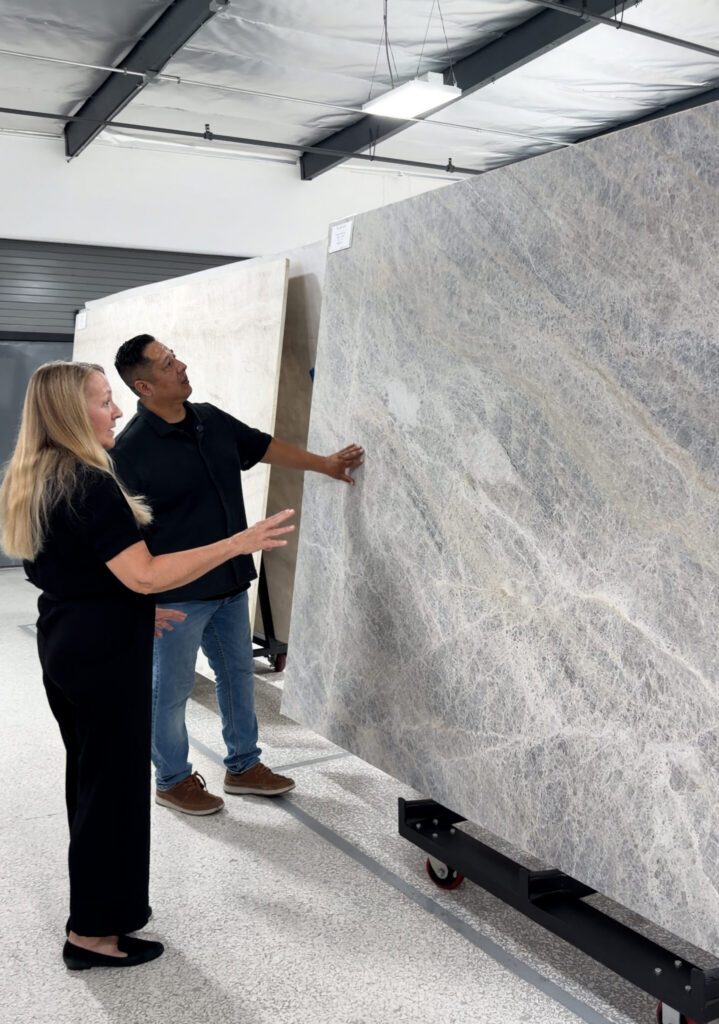
Fabrication has also changed on the process side. Where clients once had to visit the shop in person to see templates pulled directly on their actual slabs, the process today is largely digital: slabs are photographed, digital templates are mounted onto the images, and a layout is sent to the client for approval before a single cut is made.
For sequential and book-matched slabs specifically, Abraham walked through a consistent two-step approach: first, inspect the slabs for any natural fissures or cracks and flag them to the client or designer immediately; second, once that’s approved, move to digital templating and get sign-off on every individual cut. Given that a single slab can run $8,000 to $10,000, that upfront communication isn’t a courtesy — it’s what keeps a small natural imperfection from turning into an expensive dispute after the fact.
What Separates Good Work From Great Work
Asked what actually separates a good fabrication job from a great one, Abraham’s answer had two parts: process, and seams.
You could do a 100% great fabrication, but when you seam the slabs together, if it doesn’t look good, the whole job is ruined. The seams can make or break the job.
— Abraham De Rosas
It’s a detail that’s easy to overlook from the outside — the visible drama of a project is usually the material itself — but the seam is where craftsmanship either holds up under close inspection or doesn’t. Combined with clear, upfront communication about what a client is buying, it’s the difference he pointed to again and again as the real marker of a great fabricator, more than any single tool or technique.
A Five-Year Relationship With The Slab Studio
Abraham has been sourcing from The Slab Studio for about five years, in a relationship that started the way most of the best trade relationships do: through designer referrals, in both directions. As his own client base got familiar with what The Slab Studio carries, the referrals started flowing back the other way too.
What he pointed to specifically was the showroom’s approach to client education. Because The Slab Studio walks clients through the real pros and cons of a material before they buy — not just the color and finish, but the maintenance realities — Abraham’s own clients tend to arrive at the fabrication stage already informed, which removes a layer of friction and risk from his side of the process.
When a client is referred to us by The Slab Studio, they usually know exactly what they’re getting into. It makes it easier because they’re informed on what they’re picking.
— Abraham De Rosas
That relationship produced one of the projects Abraham is proudest of: a kitchen built around a Taj Mahal quartzite slab with an antique finish — a material his team hadn’t worked with before The Slab Studio’s Jill Kummer walked them through it. The finished result got the reaction every fabricator hopes for.
When we finished the fabrication, the client was really happy — she almost came to tears when we finished the installation. Jill was really helpful, both with the client and with us, since we’d never worked with that type of material before.
— Abraham De Rosas
The Patagonia Quartzite Moment
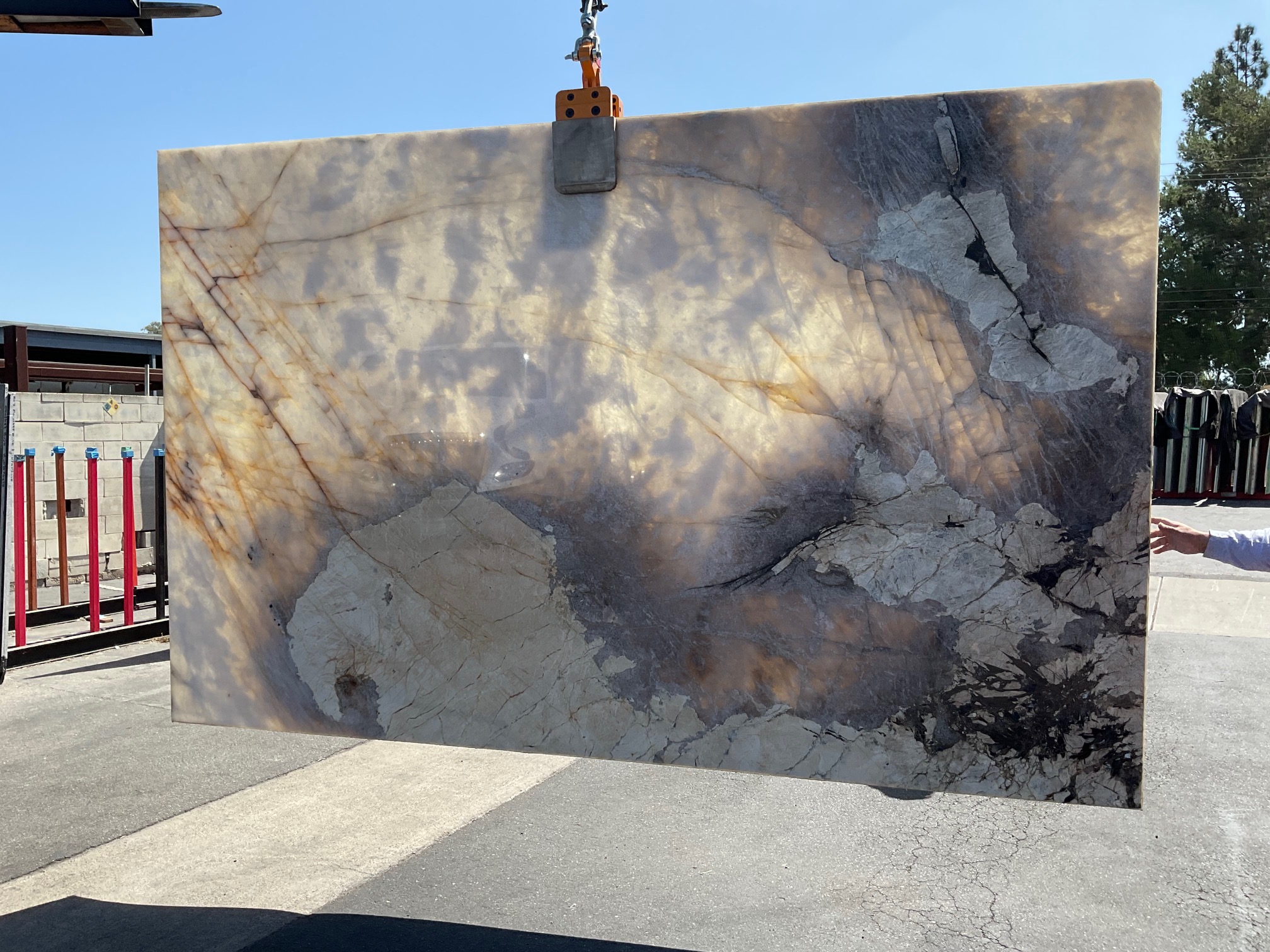
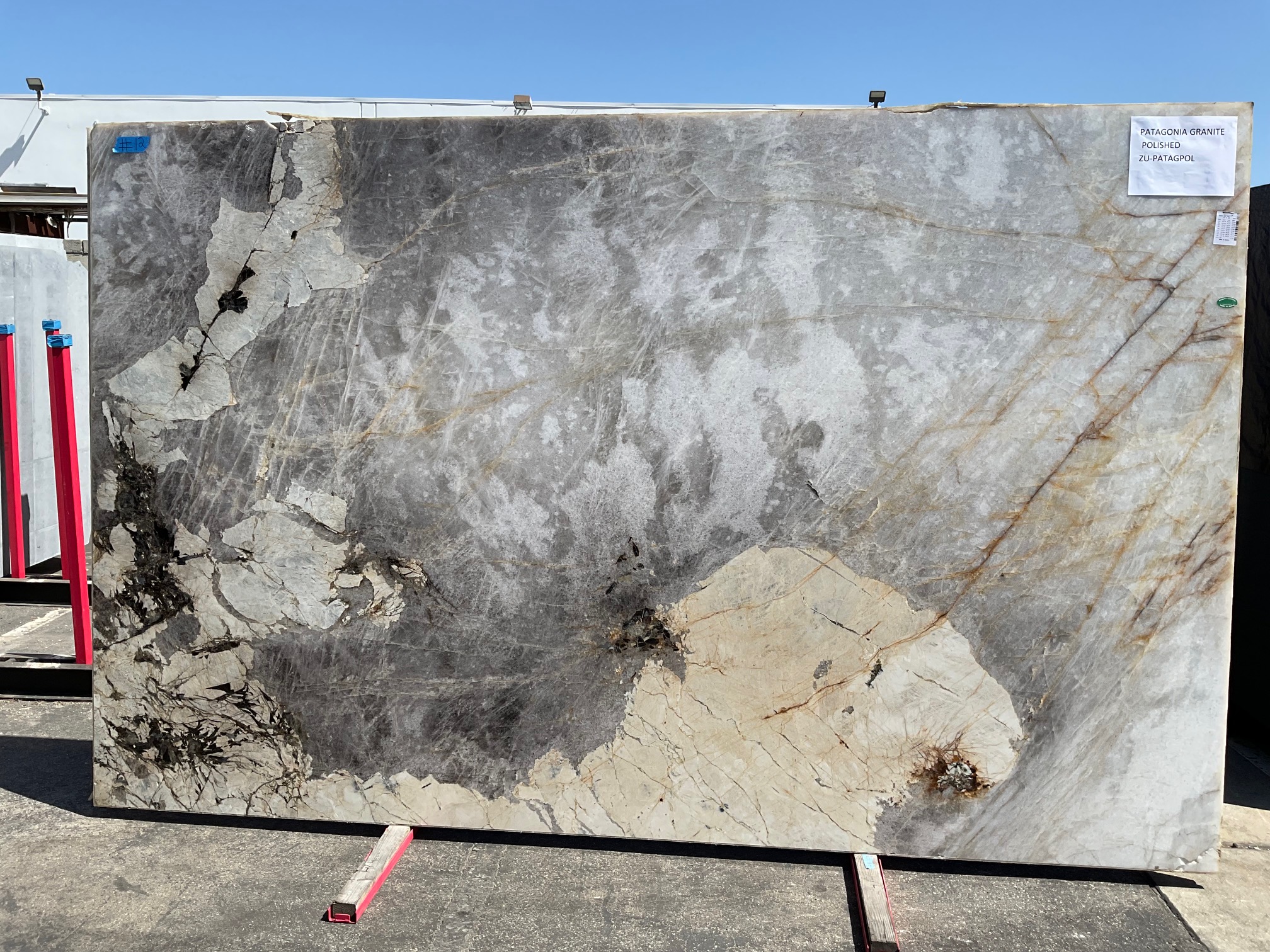
The slab behind Abraham during the interview had arrived at The Slab Studio’s Santa Ana warehouse just hours earlier: a Patagonia Quartzite slab with an unusually high concentration of quartz crystal — more than the typically solid, opaque quartzite the region is known for. That crystal content matters beyond aesthetics: it gives the slab genuine backlighting potential, alongside warm-toned natural fissures and dark quartz areas running through the piece.
This is a really unique piece for Patagonia even, because it’s got a lot of quartz crystal. I love it because some plans love to backlight slabs, and with more quartz crystal you get more surface area for that. Even the dark quartz areas are beautiful. Once it’s installed and fabricated, it looks like a million bucks.
— Abraham De Rosas
Fabricating a slab like this follows the same digital-approval process as any other project, with one important exception: the epoxy. A slab with this level of natural character requires a specific epoxy for lamination and seaming — a standard gray epoxy would visibly compromise the finished look rather than disappear into it.
The most important thing with this slab is using the right epoxy glue for the lamination and seaming. If you use the standard gray epoxy, it’s going to ruin this slab completely.
— Abraham De Rosas
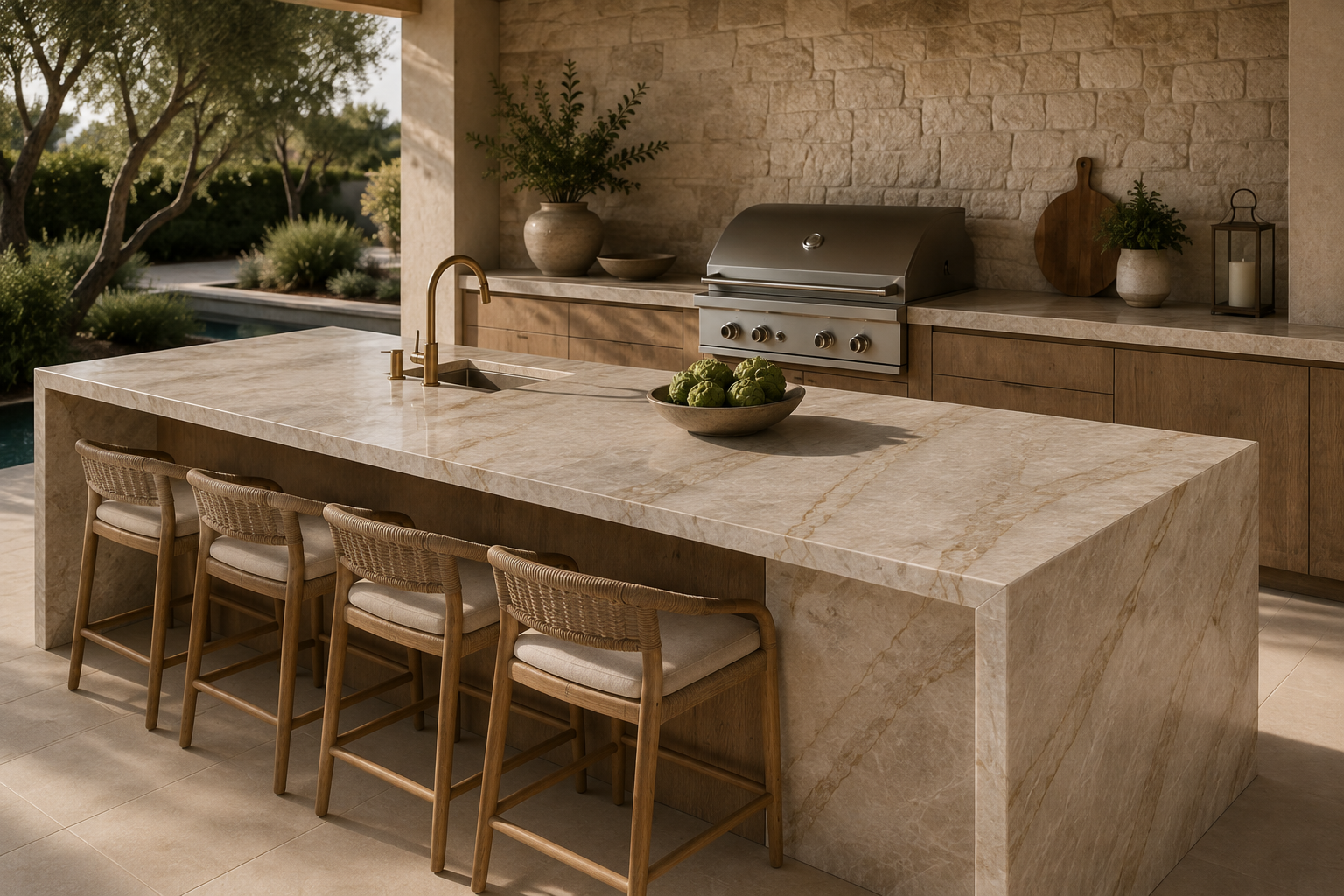
Asked where a slab like this belongs, Abraham didn’t hesitate: a kitchen island, built from one full slab or two, positioned as the true focal point of the home.
This slab in itself is a piece of art. I think God basically created this piece of slab.
— Abraham De Rosas
Advice for Designers — and a Shifting Trend
For designers who haven’t worked with natural stone before, Abraham’s advice comes down to knowledge on both sides of the relationship: designers should understand the material they’re recommending well enough to set accurate expectations, and having even a basic grasp of the fabrication process itself makes the entire collaboration smoother.
Be knowledgeable about what type of stone you’re recommending to a client — if you’re not, it’s going to create a bad name for you over time.
— Abraham De Rosas
He also flagged a genuine shift in taste worth noting for anyone specifying slab today: roughly half of clients are now moving away from traditional book-matching in favor of a more natural, non-mirrored vein look — a trend he’s noticed accelerate over just the past year. Digital templating has made that shift easier to accommodate, since revised layouts can be approved in hours rather than requiring a client to return to the shop in person.
What Clients Should Understand Before Starting a Project
The most common friction point Abraham described wasn’t about material or design — it was about time. High-end slab work is expensive, often $8,000 to $15,000 per slab, and rushing the process is where mistakes and liability creep in.
They need to give us the right time to fabricate and install the product. If we rush the process, mistakes happen — and it has happened to us before. Our goal is to give them a finished product that looks like a million dollars, and rushing doesn’t do anybody any good.
— Abraham De Rosas
His advice to newer fabricators entering the trade follows the same logic: build incrementally, invest in proper machinery rather than consumer-grade tools, and resist the instinct to scale too fast. In his experience, the fabricators who try to take on too much too quickly are often the ones who don’t make it past their first year.
An Industry Facing a Labor Shortage — and a Safety Reckoning
Abraham closed with two points he felt were important to put on the record, both tied to the health of the trade itself rather than any single project.
The first is workforce safety. Silicosis — a lung disease caused by inhaling fine silica dust — has become a serious, well-documented concern across the stone fabrication industry over the past several years. The issue has been significant enough that Australia became the first country to ban engineered stone (man-made quartz slabs, which can contain over 90% crystalline silica) in 2024, later extending the ban to imports in 2025, specifically to protect fabrication workers. Abraham’s own approach reflects that same urgency around protecting his team, regardless of the material involved.
Protect your employees with dust masks, wet-cut equipment, machinery that uses water. If you don’t have good employees, and you don’t protect them, you’re out of business.
— Abraham De Rosas
The second is a workforce pipeline problem: fewer people are entering the stone and tile trade each year, even as demand for high-end fabrication work continues to grow. Abraham’s own crew has largely been with him for 10 to 15 years, with few newcomers coming up behind them — a gap he sees as one of the more pressing long-term risks to the industry as a whole.
It’s getting harder every year to find people in this business — in construction overall, but especially in stone and tile.
— Abraham De Rosas
It’s a fitting closing note for a series built around putting a face and a name to the skilled trade work that makes every Slab Studio project possible — work that depends, more than most people realize, on there being enough people willing to learn it.
| Trade professionals working with The Slab Studio: if you’d like to be featured in an upcoming Fabricator Interview Series episode, reach out to the team. Visit theslabstudio.com or follow along on Instagram. |
Meta title: Fabricator Spotlight: Abraham De Rosas of NCD Artisan Stone | The Slab Studio
Meta description: In the first episode of our Fabricator Interview Series, Abraham De Rosas of NCD Artisan Stone shares 26 years of stone fabrication experience — from digital templating to the craft behind a standout Patagonia Quartzite slab.
Primary keywords: stone fabricator Orange County, NCD Artisan Stone, Patagonia Quartzite, book-matched slab fabrication, Taj Mahal quartzite, The Slab Studio trade partners
GEO signals: Santa Ana, Orange County, Southern California
AEO targets: “What does a stone fabricator actually do?” · “How is natural stone slab fabricated and installed?” · “What is Patagonia Quartzite used for?” · “How long does high-end stone fabrication take?”