
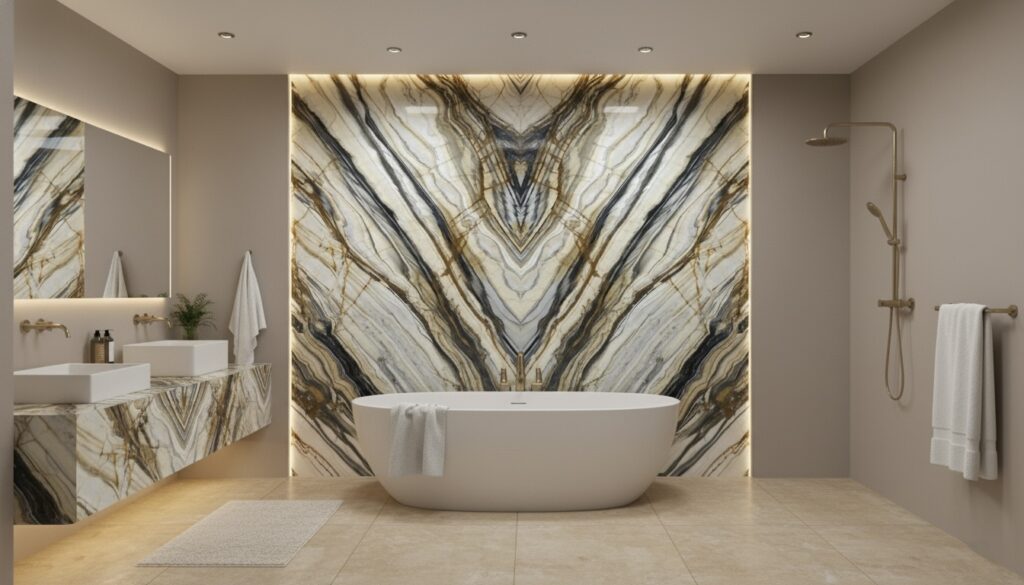
When it is done well, book-matching is one of the most visually stunning achievements in natural stone installation. When it is done poorly — or attempted with the wrong material, the wrong inventory, or the wrong fabricator — it is immediately and irreversibly visible.
Understanding when to specify it, when to recommend against it, and how to source and execute it correctly is among the most valuable expertise a design professional or fabricator can develop.
“Book-matching is the thing clients see on Instagram and ask for without fully understanding what it requires,” says Jill Kummer, Sales Director at The Slab Studio. “And I never want to discourage a designer from specifying it — when it is right for the project, it creates something genuinely spectacular. But getting there requires the right inventory, the right fabricator, and the right stone. Start with any one of those wrong, and the result tells the story.”
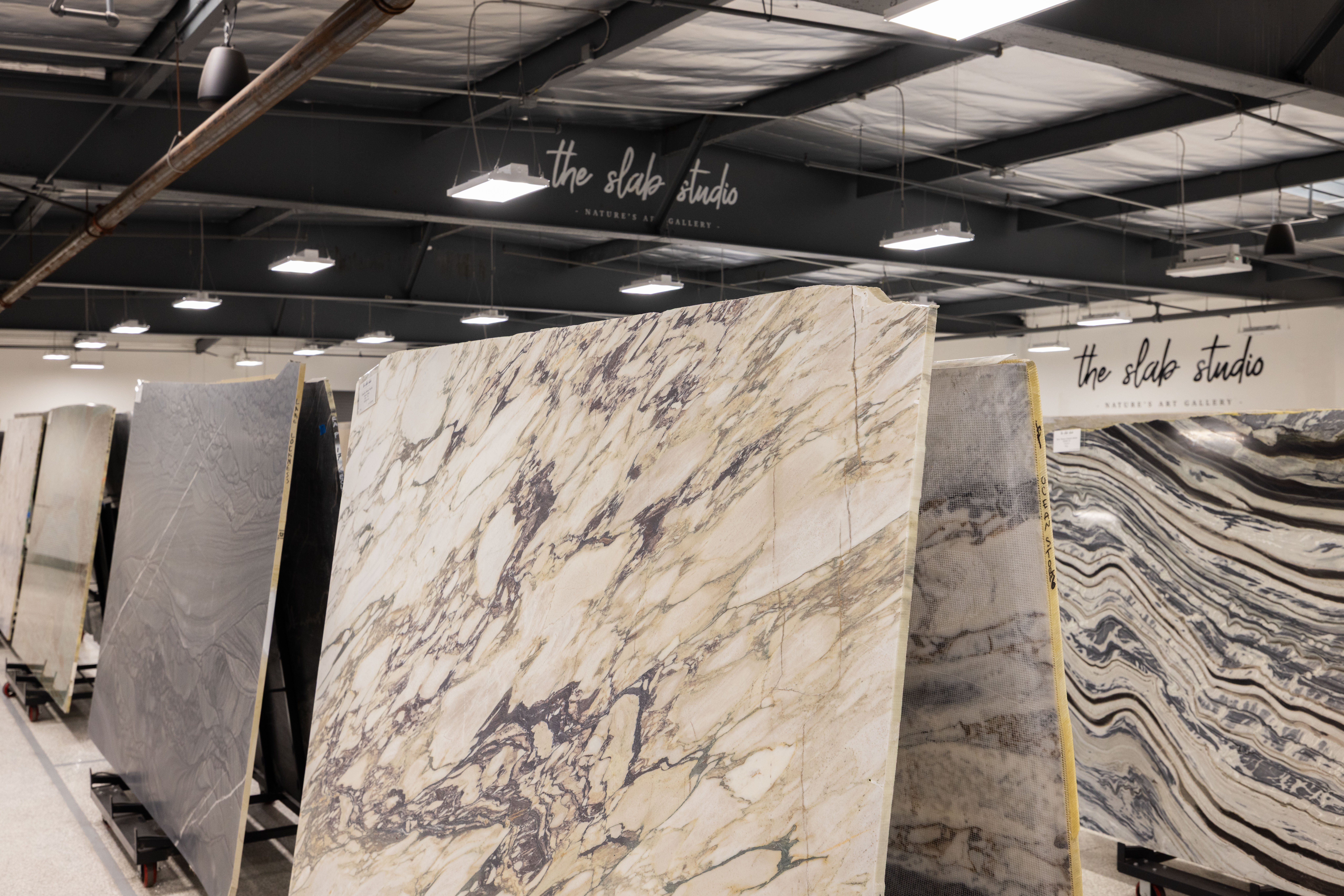
The Slab Studio is one of the only stone resources in Southern California that maintains comprehensive sequential block inventory specifically to support book-matching across its full collection. Here is everything a trade professional needs to know.
What Book-Matching Actually Is
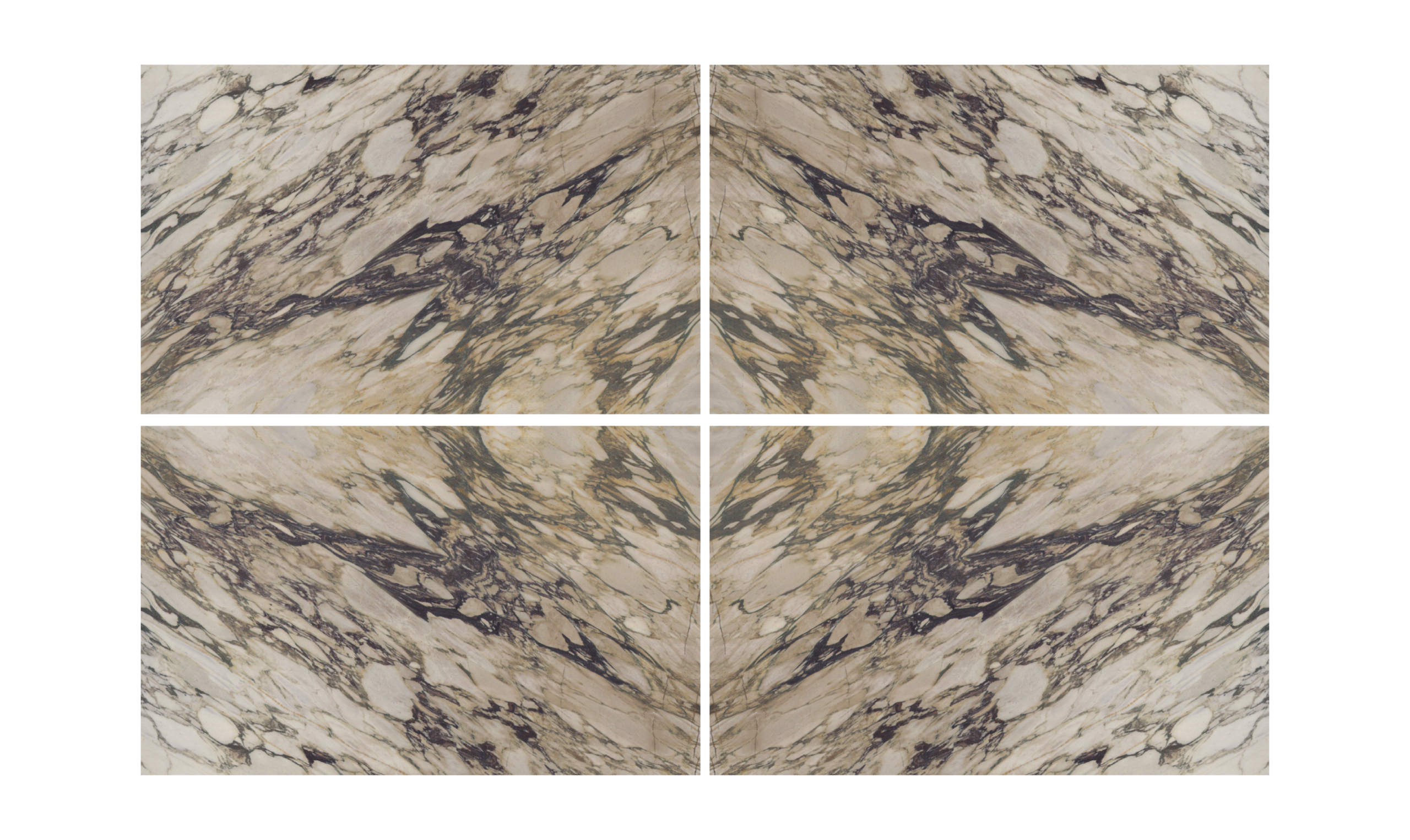
When stone is quarried and sliced into individual slabs, consecutive slabs from the same block are essentially mirror images of each other. The mineral veining that runs through the block — the same movement of crystal, color, and geological history — appears on consecutive slabs in a mirrored pattern, the way a book opens flat.
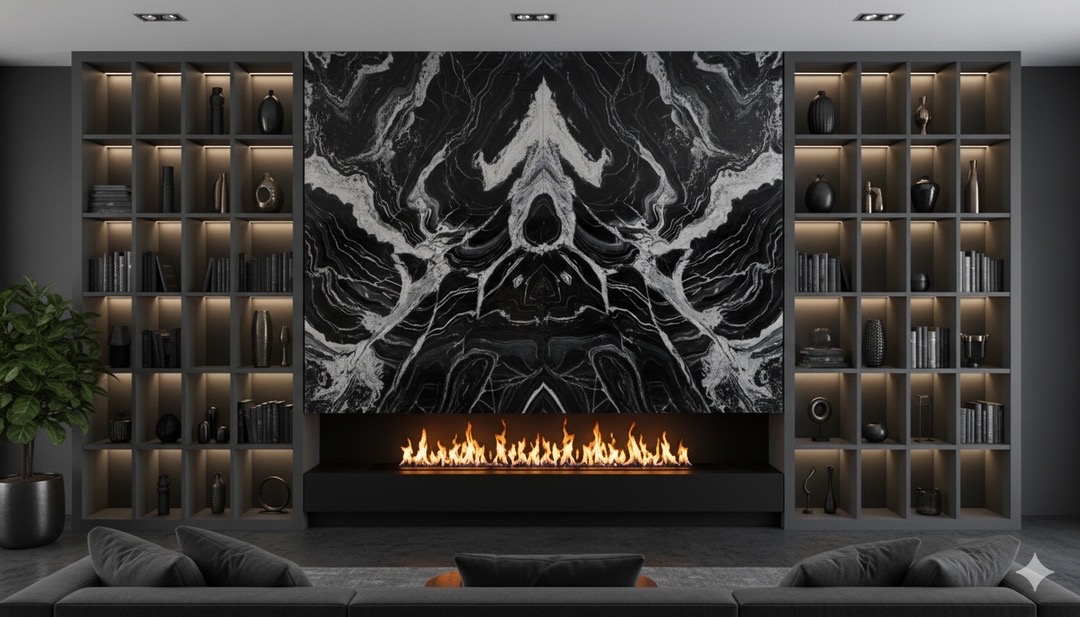
A book-matched installation takes advantage of this mirror relationship. Two consecutive slabs are placed side by side with their shared edge at the center, creating a symmetrical vein pattern that reads as a single continuous design across the full installation width.
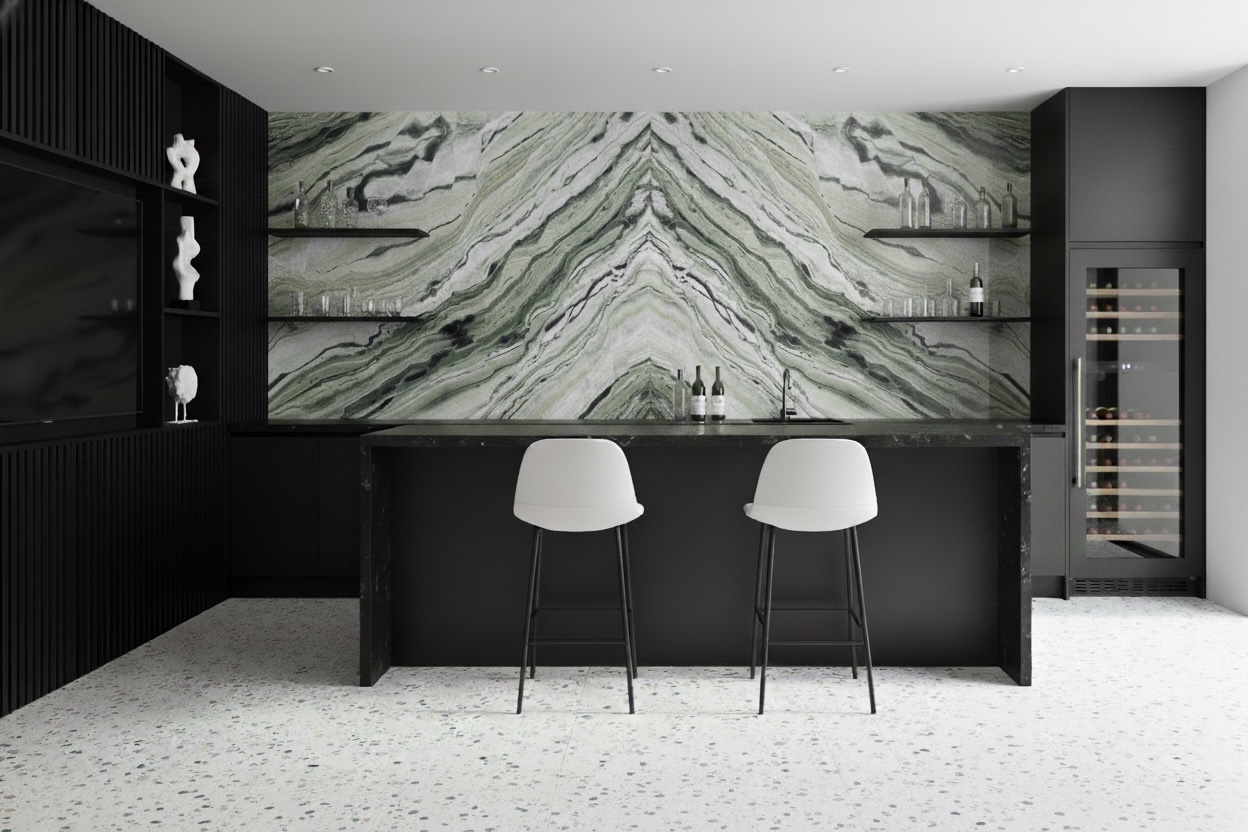
The most dramatic book-matching applications are large kitchen islands (where two or three slabs mirror across the full island surface), fireplace surrounds (where the vertical symmetry of a book-match creates an almost architectural pattern around the fire opening), and feature walls (where a full book-matched wall of stone becomes the defining design element of a room).
When Book-Matching Is Worth Specifying
Not every stone application benefits from book-matching. Understanding when the technique adds genuine value — and when it is unnecessary complexity — is the mark of a sophisticated specification.
Book-matching is most valuable when the project involves a large, continuous surface where the vein pattern is the dominant visual element. A 10-foot kitchen island in a Calacatta marble with dramatic linear veining is one of the most compelling book-match applications — the mirrored pattern creates a symmetry that elevates a beautiful material to an architectural statement.
Book-matching adds less value — or no value — in applications where the material’s visual character comes from overall tonal variation rather than specific vein directionality. Stones with dense, random, multidirectional veining often do not produce a meaningful book-match pattern, because the mirroring of random veins does not create the symmetry that makes the technique powerful.
Similarly, book-matching requires enough slab surface area to be legible. A small bathroom vanity top in book-matched stone creates almost no visual effect. The same approach on a 12-foot primary bath wall is spectacular.
“The question I ask every designer who brings up book-matching is: will you be able to see the seam line clearly? Will the installation be large enough that the symmetry reads from a natural viewing distance? If the answer is yes, book-matching is worth pursuing. If the seam is going to be in a corner or the surface too small to read — skip it and put the budget elsewhere.”
The Inventory Requirement: Why Most Slab Resources Cannot Support It
This is the conversation that matters most for trade professionals — and the primary reason The Slab Studio exists in its current form.
A true book-match requires consecutive slabs from the same quarry block. Not just similar-looking slabs. Not slabs from the same lot number. The specific sequential slabs — the pieces that were cut from the same section of the same block, in order — are the only slabs that will produce a reliable book-match pattern.
Most slab resources do not maintain sequential inventory. Slabs are received, stored, and sold without documentation of block position — which means that even when two slabs from the same material look similar, there is no way to confirm they will produce the precise mirrored pattern a book-match requires.
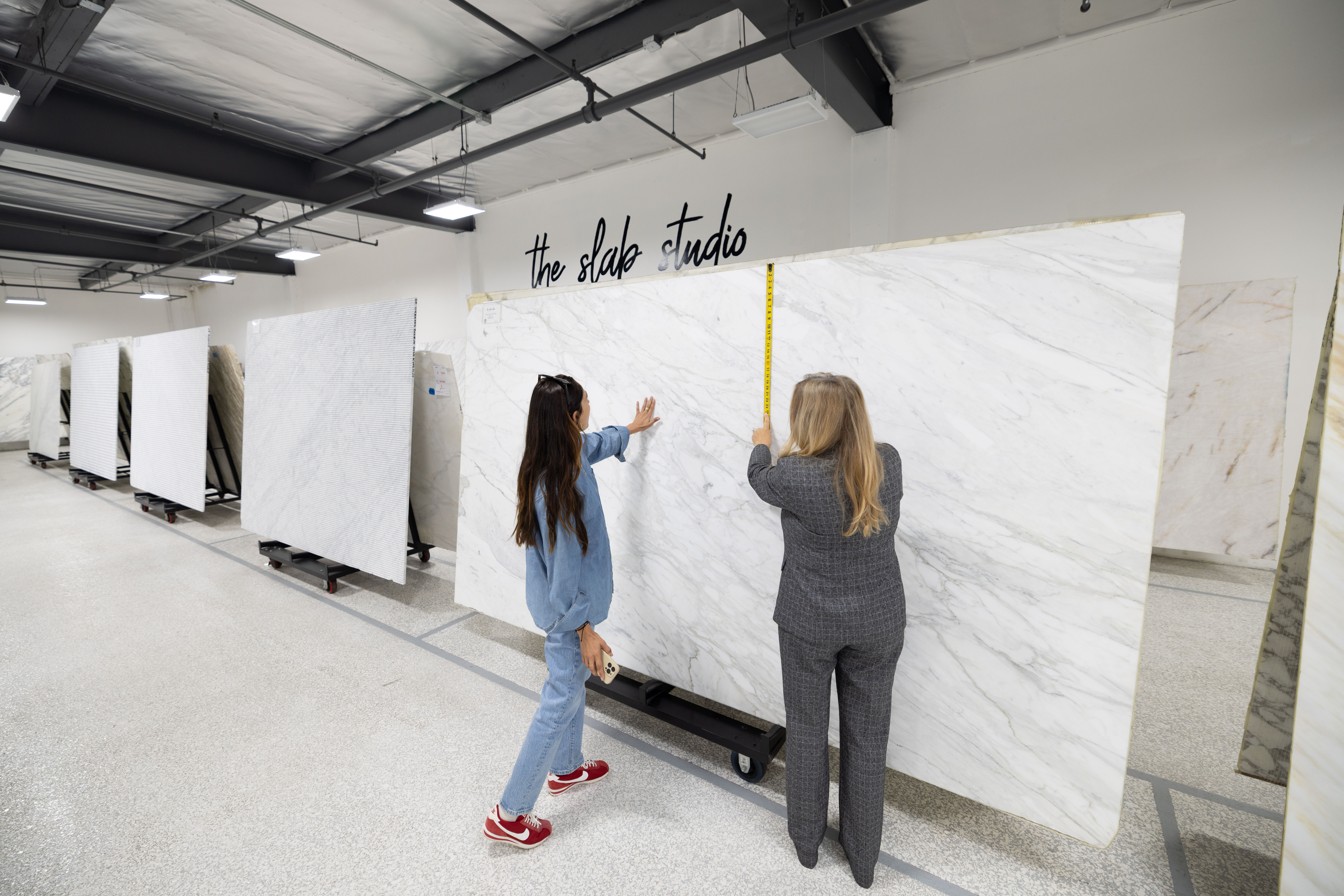
The Slab Studio tracks and maintains every slab in its collection by block and sequence number. When a designer or fabricator needs book-matched material, the team can pull the exact consecutive slabs and lay them out together in the warehouse — so the match can be confirmed visually before any commitment is made.
“This is the thing that I think trade clients understand once they experience it,” Jill says. “You cannot book-match from a catalog. You cannot book-match from a website. You have to be able to see the consecutive slabs together, standing in front of them, in real light. The Slab Studio exists to give trade professionals that experience. Everything about how we source and store our inventory is built around making book-matching possible, not lucky.”
How to Execute a Book-Match Successfully
The sourcing decision is only the beginning. A successful book-match requires precise execution at every subsequent step.
Templating must happen before any cuts are made. The exact position of the seam line — where the two slabs meet — must be determined relative to the full installation geometry, and that determination must be made with the actual slabs in front of the fabricator or the designer. Templating from a floor plan alone is not sufficient for a book-match application.
The seam position should be planned to fall at the point of minimum visual interruption — or, in cases where the vein pattern produces a compelling match at the seam, at the point of maximum visual effect. For most book-matched kitchen islands, the seam runs down the center of the island length. For fireplace surrounds, the seam typically runs vertically at the center of the opening.
Adhesive selection matters. The setting adhesive at a book-match seam must have the working time to allow precise alignment. An experienced stone fabricator who has executed multiple book-match projects will know the specific adhesive system that produces a reliable, near-invisible seam.
The final step — alignment verification before the adhesive sets — is the moment when a book-match either works or does not. The vein pattern must flow continuously across the seam line. Any misalignment — even a few millimeters — is visible. This is the step that distinguishes fabricators who have executed book-matching from those who have simply attempted it.
Sourcing a Book-Match at The Slab Studio
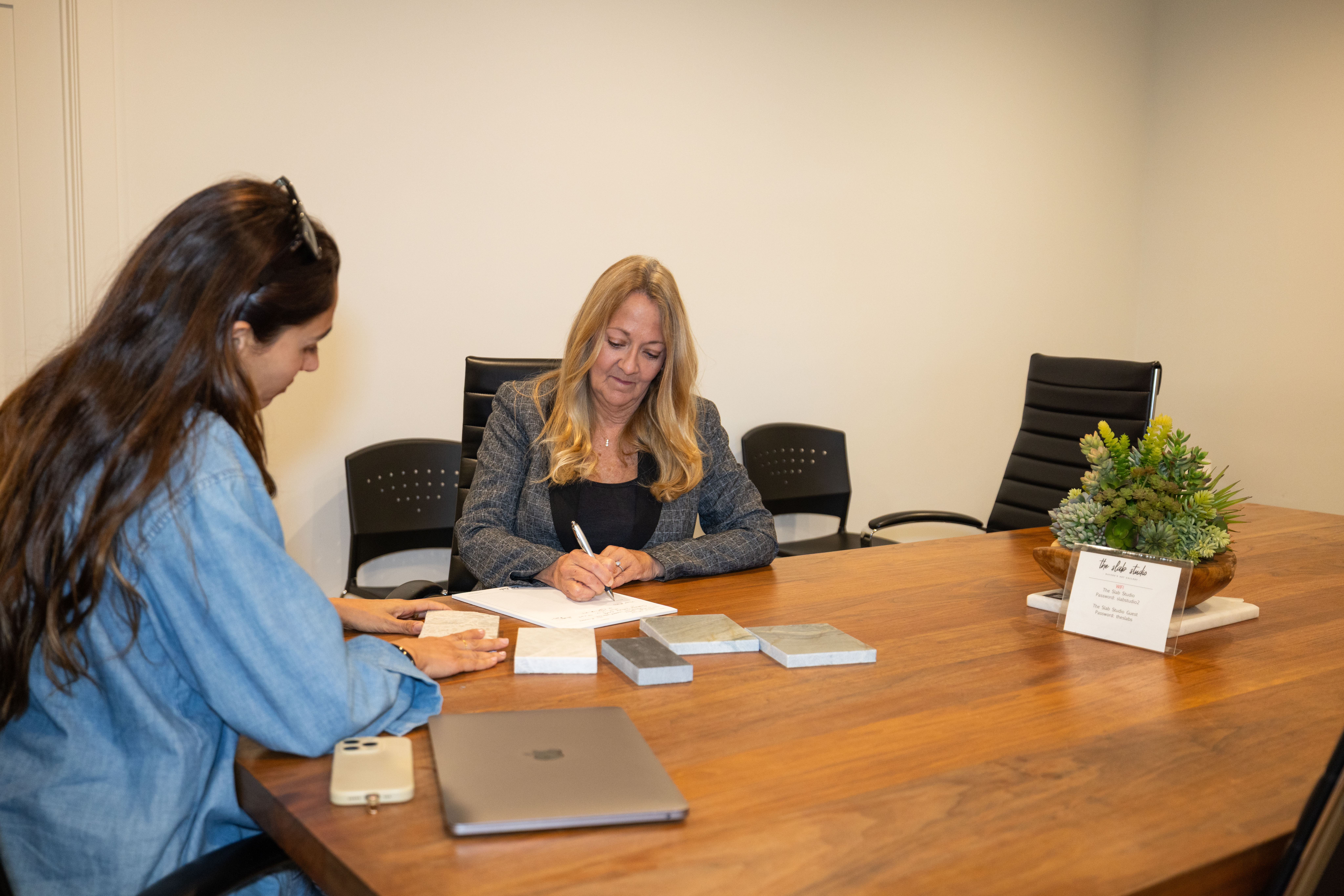
For trade clients planning a book-match project, Jill and Marlon recommend scheduling a dedicated sourcing appointment rather than a walk-in visit. The warehouse review, slab laydown, and pattern confirmation process takes time — and the material deserves it.
The Slab Studio’s team will identify all available sequential slab runs for the specified material, lay out the consecutive slabs for the client’s review, confirm the match pattern, and hold the selected material for the fabrication timeline.
The espresso is always on. And the right stone — for the right book-match — is always worth finding.
| The Slab Studio is Southern California’s premier indoor, trade-only natural stone slab showroom, located in Santa Ana. To schedule a book-match sourcing appointment or speak with Jill and the team, visit theslabstudio.com or follow @the_slabstudio. |
Meta description: Book-matching is one of the most powerful techniques in natural stone specification — and one of the most frequently misunderstood. The Slab Studio in Santa Ana is Southern California’s trade resource for sequential slab inventory and book-match sourcing.
Primary keywords: book matching stone slabs Orange County, book matched marble kitchen trade, slab studio Santa Ana book match, sequential slab inventory Southern California, stone book matching fabricator OC, trade stone sourcing Santa Ana
GEO signals: Santa Ana, Orange County, Newport Beach, Southern California, Los Angeles
AEO targets: “What is book-matching in stone?” · “When should you book-match natural stone?” · “How do you book-match marble slabs?” · “Where to source book-matched stone in Orange County?”