
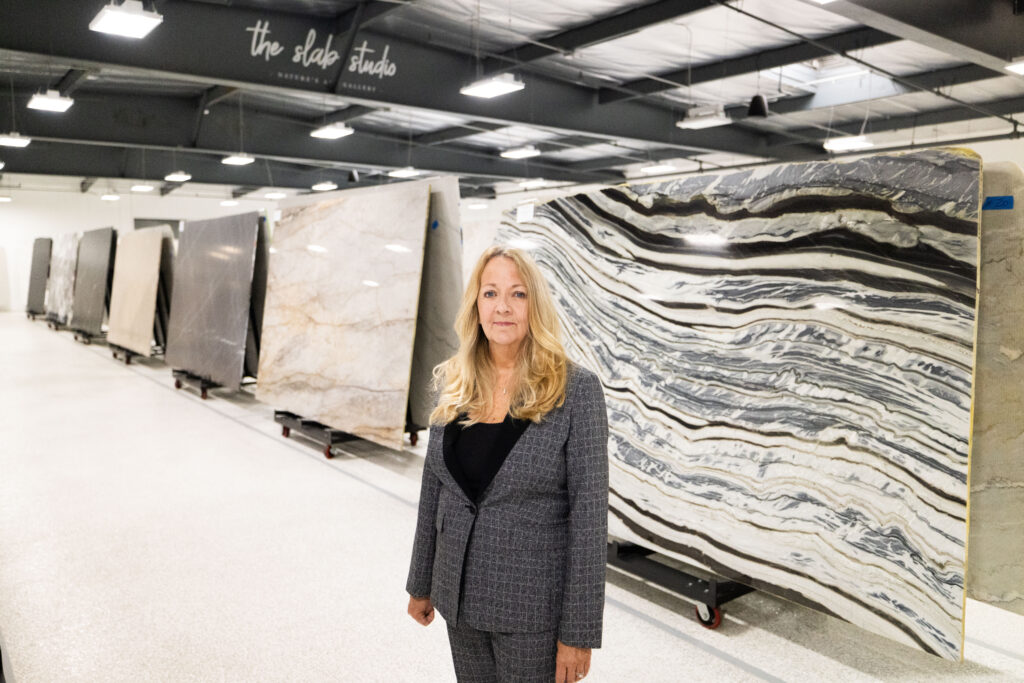
They are the two most specified natural stone materials in the Southern California luxury residential market. They are the two materials most frequently confused by clients — and, more often than designers would like to admit, by the trade professionals advising them.
Quartzite and marble.
Both are natural stone. Both can be white, gray, or dramatically veined. Both are found in the most prestigious residential projects in Orange County and Los Angeles. But they are fundamentally different materials — in their geological origin, their performance characteristics, their maintenance requirements, and their appropriate applications. And the differences matter enormously when a design professional is specifying for a client’s kitchen or primary bath.
“I probably have this conversation three times a week,” says Jill Kummer, Sales Director at The Slab Studio and one of Southern California’s most experienced stone professionals. “And I never say it in a way that is critical of the designer. The confusion is understandable — the visual overlap, especially at the high end of the quartzite market, is real. But the performance difference is significant, and it affects every application decision.”
This is the complete guide. Read it once, refer back to it often.

The Geology: Why They Are So Different
Marble is formed when limestone — a sedimentary rock composed primarily of calcium carbonate — is subjected to extreme heat and pressure deep within the earth. This metamorphic process recrystallizes the calcium carbonate into the interlocking crystal structure that gives marble its distinctive translucency and the flowing, organic veining that designers prize.
Quartzite is formed when sandstone — a sedimentary rock composed primarily of quartz grains — undergoes the same metamorphic process. The quartz grains recrystallize into an interlocking matrix that is significantly harder than the original sandstone — and significantly harder than marble.
That geological difference is everything. Calcium carbonate — the primary mineral in marble — is reactive to acids. Quartz — the primary mineral in quartzite — is not. This single fact explains most of the performance difference between the two materials.
True Quartzite vs. Quartzitic Materials: A Critical Distinction
Before going further, a clarification that every design professional should have: not every material sold as “quartzite” is quartzite.
The stone market includes a category sometimes called quartzitic materials — stones that are partially metamorphosed and contain a blend of quartz and softer minerals. These materials may feel similar to quartzite and may be sold under names that sound like quartzite, but they behave more like marble in terms of acid sensitivity and surface hardness.
“This is one of the most important conversations I have with designers who are new to slab specification,” Jill says. “The name on the label is not always a reliable indicator of what the material actually is. A simple acid test — a drop of lemon juice or vinegar on an inconspicuous area — will immediately tell you whether a material is true quartzite or something softer. A true quartzite will show no reaction. A marble or quartzitic material will etch immediately.”
The Slab Studio’s team can identify and confirm the true mineral composition of every material in the collection — a service that trade professionals should take full advantage of before specifying.
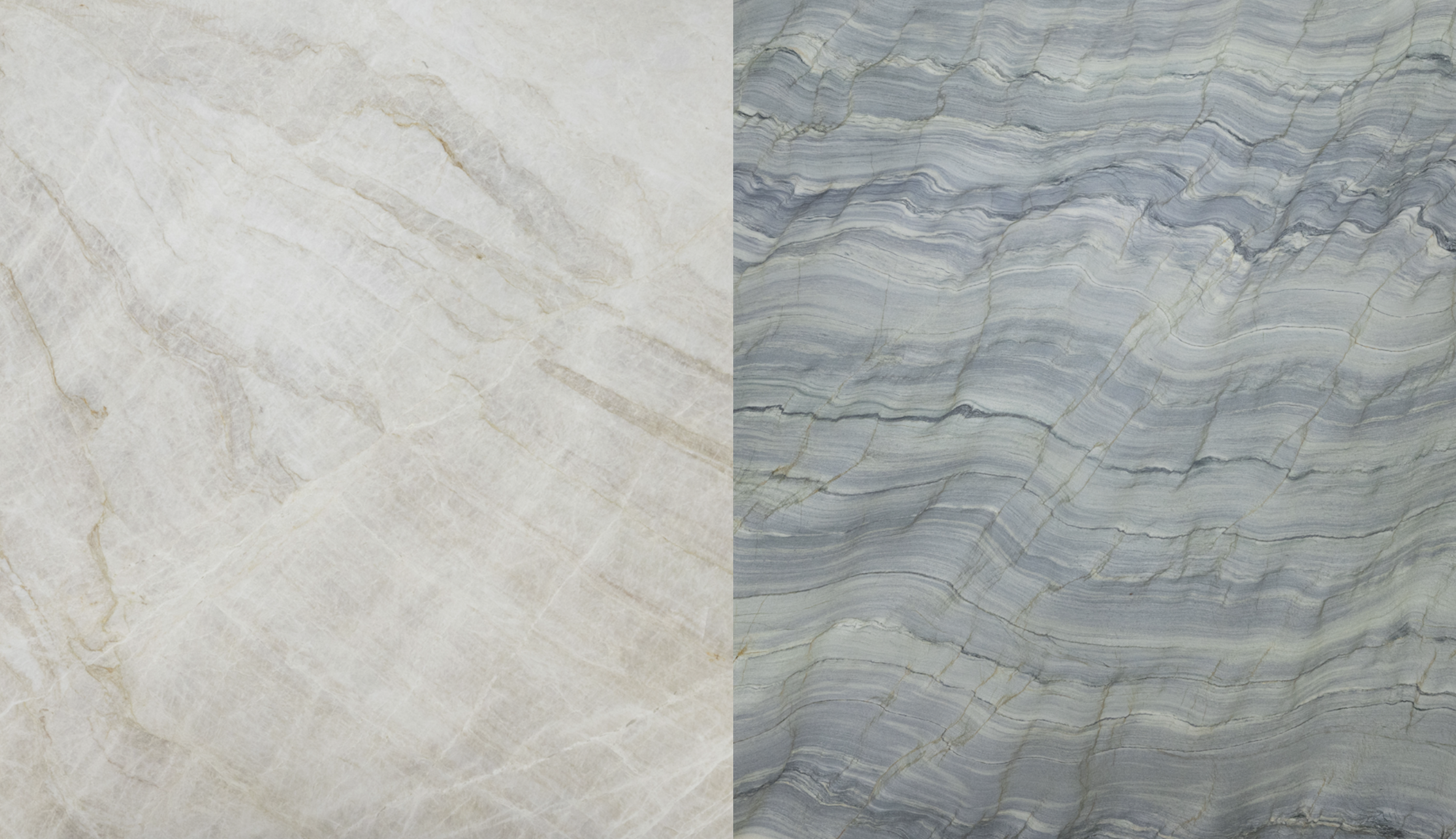
Performance Comparison: The Practical Reality
Acid resistance: Marble etches when it contacts acidic substances. Coffee, wine, lemon juice, vinegar, and most standard cleaning products will leave dull marks on a polished marble surface. These marks can be re-polished by a stone restoration professional, but they are part of the maintenance reality of marble. Quartzite does not etch.
Scratch resistance: The Mohs hardness scale rates marble at approximately 3–4, and quartzite at 7–8. In practical terms, quartzite is significantly more resistant to surface scratching. For kitchen countertops that will see daily use, this difference is meaningful.
Heat resistance: Both materials tolerate heat better than most engineered surfaces, but neither should be used as a direct trivet. Quartzite’s harder crystalline structure provides slightly more heat tolerance. Both materials should have a sealing system in place regardless of heat resistance.
Stain resistance: Both marble and quartzite are porous and require sealing. Unsealed marble will absorb staining agents — oils, wine, pigmented liquids — more readily than unsealed quartzite. Properly sealed, both materials are relatively stain-resistant.
Maintenance requirements: Marble requires annual sealing with a penetrating sealer, careful pH-neutral cleaning, and professional re-polishing when etch marks accumulate. Quartzite requires sealing (typically less frequently than marble) and pH-neutral cleaning. Quartzite’s greater hardness means it requires professional stone care less frequently in most applications.
Aesthetics: Where Marble Still Wins
Here is the honest part of the conversation. Despite its greater practicality, quartzite does not quite replicate what marble does visually.
Marble has a translucency — a quality of light moving through the crystal structure of the stone — that quartzite does not match. The finest Calacatta and Statuario marbles have a depth and luminosity that is unique in the stone world. The veining in marble has an organic, flowing quality that reflects its calcium carbonate composition and is distinct from the veining patterns most commonly seen in quartzite.
For applications where the aesthetic statement is the priority — a primary bathroom, a fireplace surround, a grand entry — and where the use conditions support marble (lower-traffic, committed maintenance, genuine appreciation for the material’s character over time), marble remains the gold standard.
“The designers who know stone well do not choose between marble and quartzite. They know when each material is right,” Jill says. “Quartzite is not marble’s replacement. It is marble’s alternative for the applications where marble’s limitations matter.”
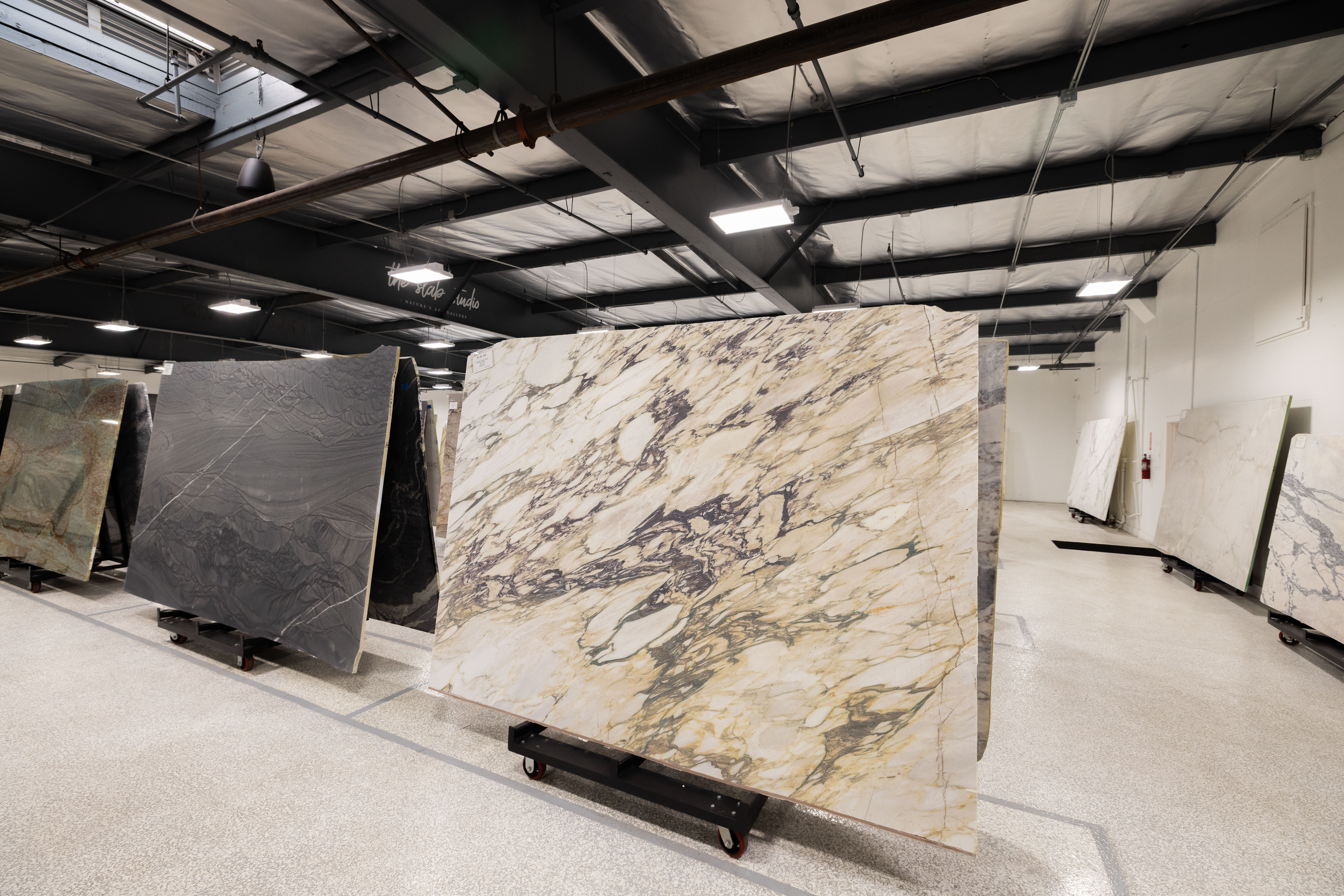
Application Guide: Which Material for Which Project
Kitchen countertops with heavy daily use: Quartzite is the recommendation. The acid and scratch resistance that quartzite provides over marble is meaningful in a space that sees cooking every day.
Kitchen countertops used primarily for entertaining: Either material can be appropriate, depending on the client’s commitment to maintenance and their appreciation for marble’s patina over time.
Primary bathroom: Marble is the gold standard. The lower-traffic environment and controlled use conditions make marble’s limitations far less impactful — and the material’s visual quality in this application is unmatched.
Fireplace surrounds: Either material works beautifully. The decision is aesthetic.
Entry and grand hall floors: Marble is the traditional choice and creates the most dramatic statement. For high-traffic family entries, quartzite or a harder quartzitic material is a more practical recommendation.
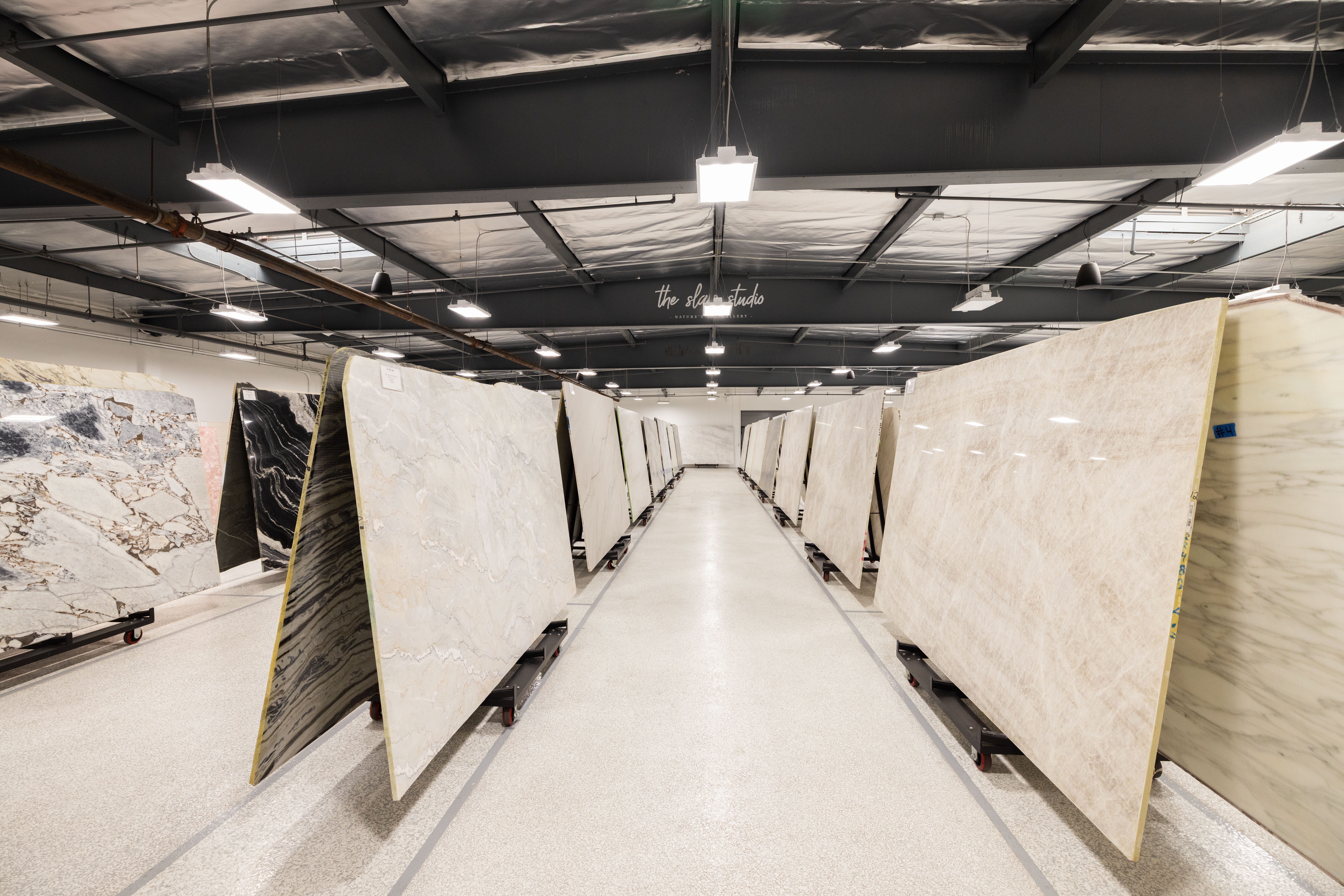
The Slab Studio carries an extensive collection of both marble and quartzite in sequential block runs, available for trade clients to view and compare in the Santa Ana showroom. Jill and the team are always available to help confirm material identification and guide application-specific specification decisions.
| The Slab Studio is Southern California’s premier indoor, trade-only natural stone slab showroom, located in Santa Ana. Visit theslabstudio.com or follow @the_slabstudio. |
Meta description: Quartzite and marble are the two most specified natural stone materials in the luxury residential market — and the two most frequently confused. Jill Kummer and the team at The Slab Studio in Santa Ana break down what every designer and fabricator needs to know.
Primary keywords: quartzite vs marble trade, quartzite slab Santa Ana, marble vs quartzite kitchen, quartzite countertop designer Orange County, natural stone specification guide, trade stone resource Southern California
GEO signals: Santa Ana, Orange County, Newport Beach, Southern California, Los Angeles
AEO targets: “Is quartzite better than marble for kitchen countertops?” · “What is the difference between quartzite and marble?” · “How do you tell quartzite from marble?” · “Which is more durable, quartzite or marble?”