
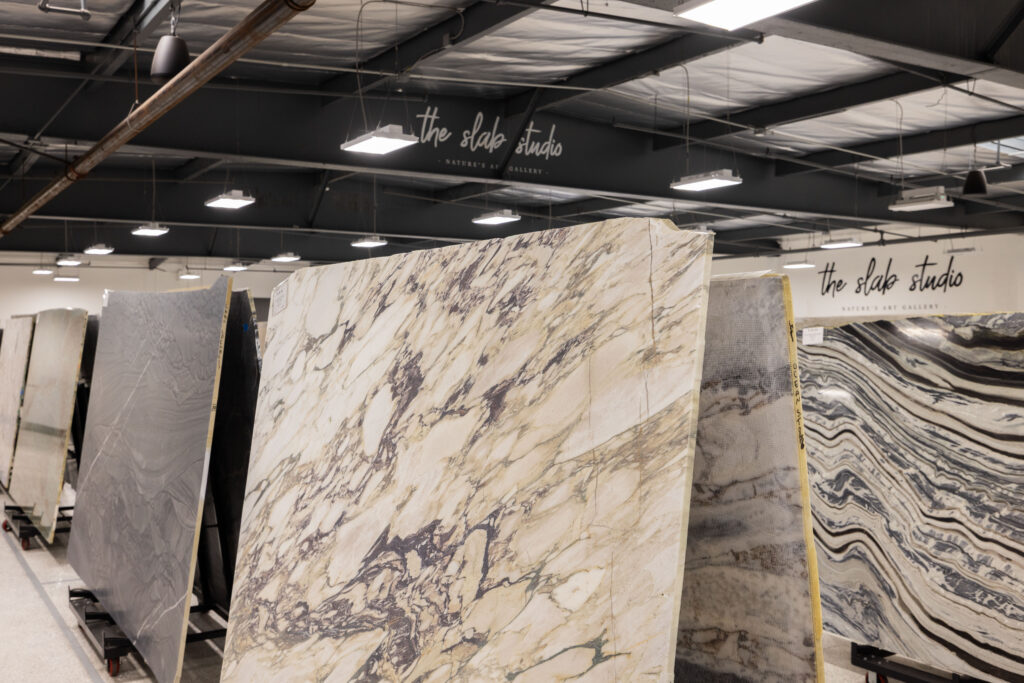
There is a moment that happens in almost every first visit to The Slab Studio.
A designer or fabricator walks into the showroom, sees the slabs arranged in the warehouse behind the display floor, and realizes — often for the first time — how much they did not know about what they were looking at.
Not because they aren’t sophisticated. Because reading a slab is a skill. And like any skill developed over years of hands-on experience, it is not something you absorb from a photograph or a product description.
“I can tell in about 60 seconds whether someone has a practiced eye for stone,” says Jill Kummer, Sales Director at The Slab Studio and one of the most experienced stone professionals in Southern California. “And I never say that in a way that’s critical — I say it because there is so much to learn, and learning it makes every future purchase more confident and more right.”
This guide is an introduction to reading a slab the way Jill reads one — the markers, the language, and the questions that separate an average purchase from an exceptional one.
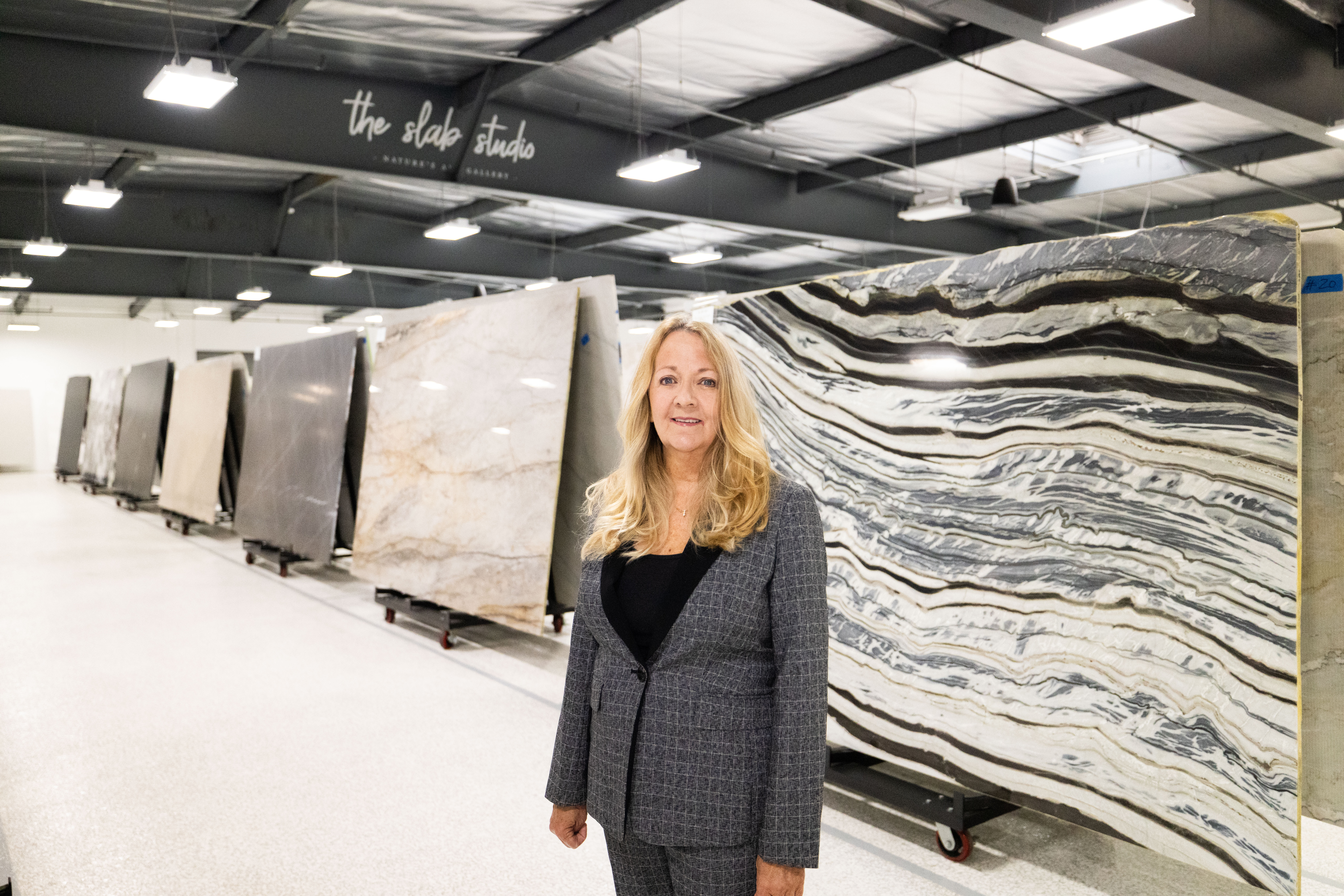
Understanding Slab Grading: What the Labels Actually Mean
The stone industry uses a grading system — typically expressed as Commercial Grade, Standard Grade, and First Choice or Premium Grade — but these designations are less standardized than most buyers assume. There is no universal governing body that certifies stone grades. Grading is applied at the quarry level, and standards vary by producer, country of origin, and even by product line.
What grading is attempting to measure, at its most basic level, is consistency. A Commercial Grade slab will have more variation in color, more pitting, more veining irregularity, and potentially more surface defects than a First Choice slab from the same quarry. For certain applications — a rustic outdoor installation, a heavily textured natural finish, a budget-conscious commercial project — Commercial Grade material is an entirely appropriate choice.
For the premium residential projects that form the core of The Slab Studio’s trade clientele, First Choice and Premium Grade material is the standard. This is not about status — it is about what the material will look like in a million-dollar kitchen, and whether it will perform without issue for decades.
“You can find a Calacatta marble that retails for $75 a square foot or one at $200. The grade difference is real and visible. The lower grade piece might have an unbalanced vein — heavy on one side, absent on the other. The color may wash out toward the edge. There could be pitting or fissures that compromise the surface. For a client buying one of the most expensive things in their home, those differences matter enormously.”
Veining: The Most Important Visual Variable
Veining is the visual signature of a natural stone slab — the lines, rivers, and movements of mineral deposit that run through the stone and give it its character. Learning to read veining is the most critical skill in slab selection.
There are several dimensions to evaluate when looking at a slab’s veining:
Direction and flow: Does the veining move in a consistent direction across the slab, or is it random and multidirectional? Consistent directional veining is typically easier to work with — it produces a more cohesive installation and allows for better book-matching. Highly dramatic, multidirectional veining can be stunning but requires a more experienced fabricator to manage successfully.
Balance: Is the veining distributed relatively evenly across the full slab? Or does the vein concentrate heavily on one side, leaving the opposite edge flat and devoid of interest? Unbalanced veining is one of the most common markers of lower-grade material — and one of the most impactful on finished appearance.
Thickness and movement: Fine, delicate veining — sometimes described as ‘calligraphy’ — creates an elegant, restrained look particularly associated with Calacatta and Statuario marbles. Bold, thick veining with dramatic movement — characteristic of many quartzites and some more dramatic marbles — makes a statement that is visible from across a room. Neither is better; both require matching to the right project and client aesthetic.
Continuity across slabs: When a project requires multiple slabs, how well do the veins continue from one slab to the next? This is the foundation of book-matching — and it is a question that can only be answered by looking at sequential slabs from the same block side by side.
Book-Matching: What It Is and Why It Matters
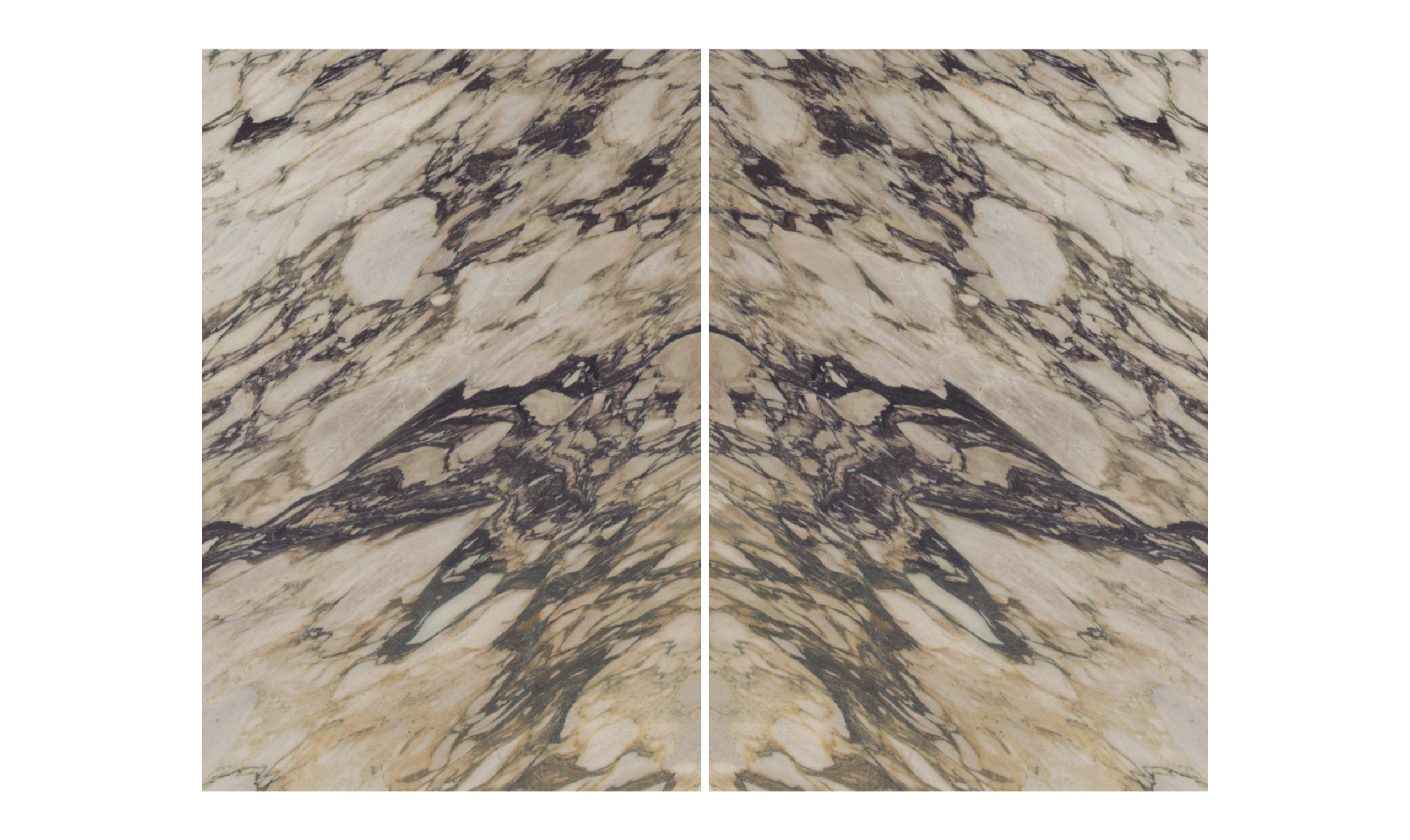
Book-matching is one of the most important — and most frequently misunderstood — concepts in premium slab work. When stone is quarried and sliced into slabs, consecutive pieces from the same block are mirror images of each other: the same veining, mirrored along the cut edge, the way a book appears when opened flat.
A book-matched installation — most commonly seen in kitchen islands, fireplace surrounds, and feature walls — creates a symmetrical, architectural pattern from the stone’s natural veining. When done well, it is one of the most dramatic and recognizable hallmarks of exceptional stone work. When done poorly — with mismatched veins, poor alignment at the seam, or slabs from different blocks — it is immediately visible to any trained eye.
The Slab Studio sources and stores all of its material in sequential block runs specifically to support book-matching. Every slab has a known position in its sequence. When a designer or fabricator needs two or more pieces for a matched installation, the team can pull the exact consecutive slabs and lay them out in the warehouse to confirm the match before any commitment is made.
“Book-matching is not just about aesthetics. It’s about showing a level of craftsmanship that a client will feel every time they walk into their kitchen. When the vein flows perfectly across a 10-foot island with an invisible seam — that’s when a slab becomes architecture.”
Surface Finish: Polished, Honed, and Leathered
The finish applied to a natural stone slab dramatically changes its visual character, tactile feel, and maintenance requirements. Understanding the primary finish options is essential for any designer or fabricator working with premium slab material.
Polished: The most common finish. A high-gloss surface that maximizes the depth of color and the visual drama of veining. Polished marble and quartzite are the standard for kitchen countertops and formal bath applications. The downside: polished surfaces show scratches, water spots, and fingerprints more readily than other finishes.
Honed: A flat, matte finish achieved by stopping the polishing process before the final gloss stage. Honed stone has a softer, more organic appearance — it tends to feel more casual and contemporary than polished stone. It also shows less surface scratching. The trade-off is that honed surfaces are typically more porous and require more diligent sealing than polished.
Leathered: A finish that preserves the natural texture of the stone’s surface — its small pits and undulations — while closing the pores. Leathered stone has a distinctive tactile quality that polished and honed surfaces lack. It is highly resistant to fingerprints and water spots, making it a practical choice for kitchen surfaces.
Fissures and Pits: What Is Acceptable and What Is a Red Flag
Natural stone is not a uniform material. It contains the full record of its geological formation — including natural fissures, pits, and inclusions that are part of the stone’s character.
A fissure is a natural crack in the stone that formed during its geological development. Fissures are not the same as cracks introduced during cutting or handling — they are part of the stone’s structure and, in most cases, do not compromise its integrity. Well-executed fabrication will plan seams and cuts to avoid placing fissures in high-stress positions. A slab with significant visible fissuring should be evaluated carefully with the fabricator before purchase.
Pitting refers to small voids or holes in the stone’s surface, most commonly seen in limestone, travertine, and some marbles. Unfilled pitting is a natural and acceptable characteristic in many materials — and is actually celebrated in certain aesthetics, particularly with Mediterranean-influenced travertine. Filled travertine, where the pits are grouted before polishing, creates a smoother, more uniform surface appropriate for kitchen and bath countertops.
The line between acceptable natural variation and a quality concern is one that Jill and the team at The Slab Studio help trade clients navigate on every visit. No piece of natural stone is flawless. The question is always whether the variation serves the project — or compromises it.
How to Evaluate a Slab Like a Professional
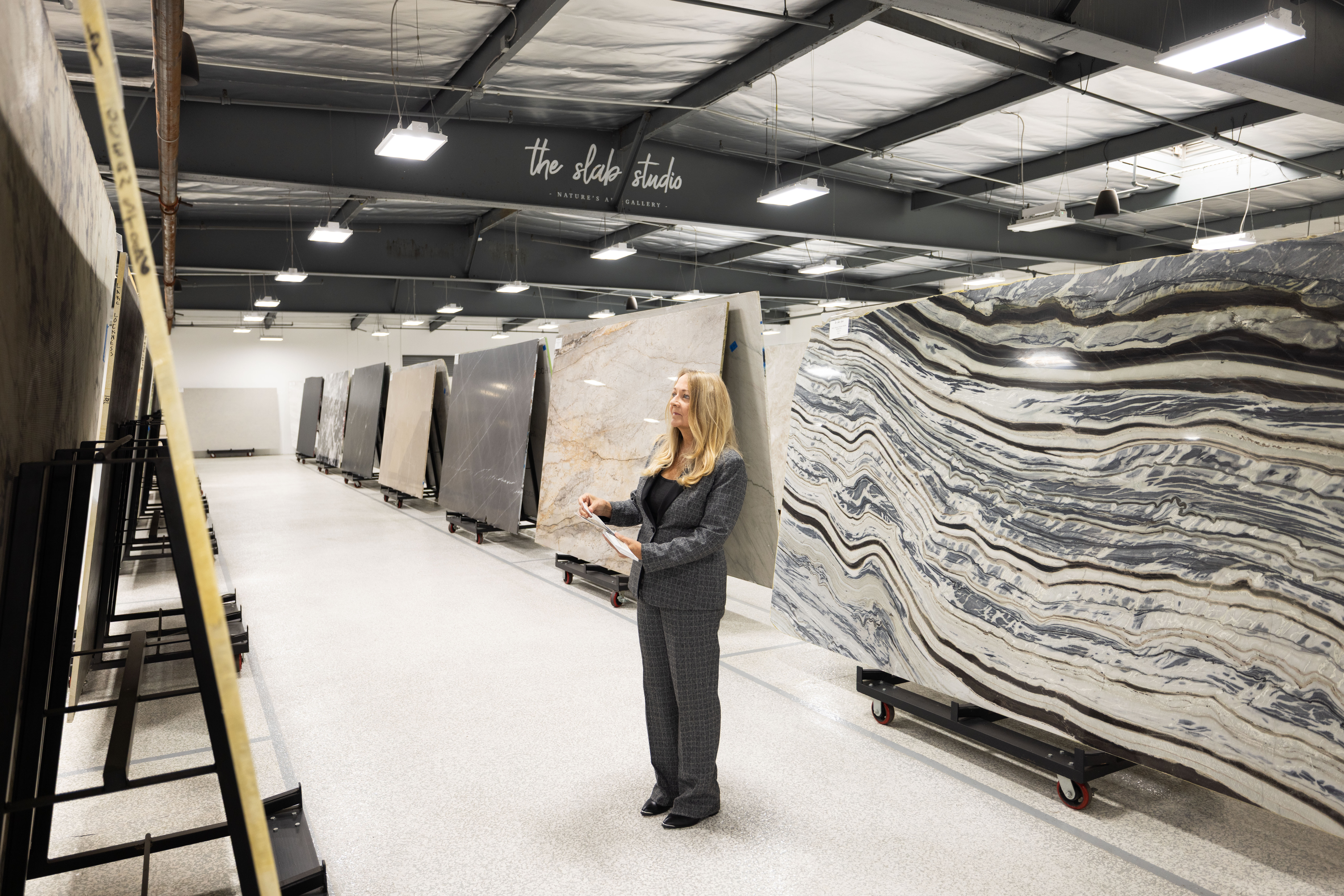
The following is how Jill approaches a slab evaluation for a new project:
Start with the full slab view: Step back far enough to see the entire slab at once. This is how it will read in the installed application. Is the veining balanced? Is the movement interesting? Does the color feel right for the project aesthetic?
Move in close: Look at the surface carefully for pitting, fissuring, and surface variation. Understand what you are looking at — whether it is natural character or a quality concern.
Check the edges: The cut edges of a slab tell you about its thickness consistency. Premium slabs have consistent thickness across the full piece; lower-grade material can vary noticeably from edge to edge, which complicates fabrication.
Look at it in different lights: Natural stone looks dramatically different under warm incandescent light versus cool daylight versus LED. The Slab Studio’s showroom is designed to allow trade clients to evaluate material under multiple light conditions. Pull the slab into the natural light from the showroom entrance if needed.
Compare against the sequential slabs: If book-matching or a multi-slab installation is planned, ask to see the consecutive slabs side by side before making any decision. This is the only way to confirm that the material will work together in the final installation.
Why The Slab Studio Was Built for This Conversation
Everything about The Slab Studio — its showroom design, its sourcing model, its trade-only sales policy — was designed around one goal: giving trade professionals the environment and the expertise to make the best possible material decisions for their clients.
The indoor climate-controlled showroom means that material is never exposed to the sun bleaching and dust contamination that affects outdoor slab yards. Every sequential run is documented and organized so book-matching is available, not a lucky find. And the team — led by Jill Kummer’s 25 years of industry experience — brings a depth of knowledge to every client visit that translates directly into better outcomes on the job site.
No pressure. No high-pressure sales. Coffee is always on. And the slabs are always worth looking at.
“I want every designer and fabricator who comes through this door to leave knowing more than when they arrived. Not about our product — about stone. Because when trade professionals have a deeper understanding of the material, they make better specifications, their clients are happier, and they come back. That’s the only metric that matters to me.”
|
Meta description: Knowing how to evaluate a natural stone slab — its grade, veining, movement, and quality markers — is the difference between a good purchase and a great one. Jill Kummer and the team at The Slab Studio in Santa Ana break it down.
Primary keywords: how to choose a natural stone slab, slab grading explained, quartzite vs marble slab, natural stone quality markers, slab showroom Newport Beach, trade slab yard Orange County
GEO signals: Newport Beach, Orange County, Southern California, Costa Mesa, Irvine
AEO targets: “How are stone slabs graded?” · “What makes a good marble slab?” · “How do I choose a quartzite slab?” · “What is book-matching in stone?”